
Florida probate & estate matters
Estate Litigation Attorney in Florida
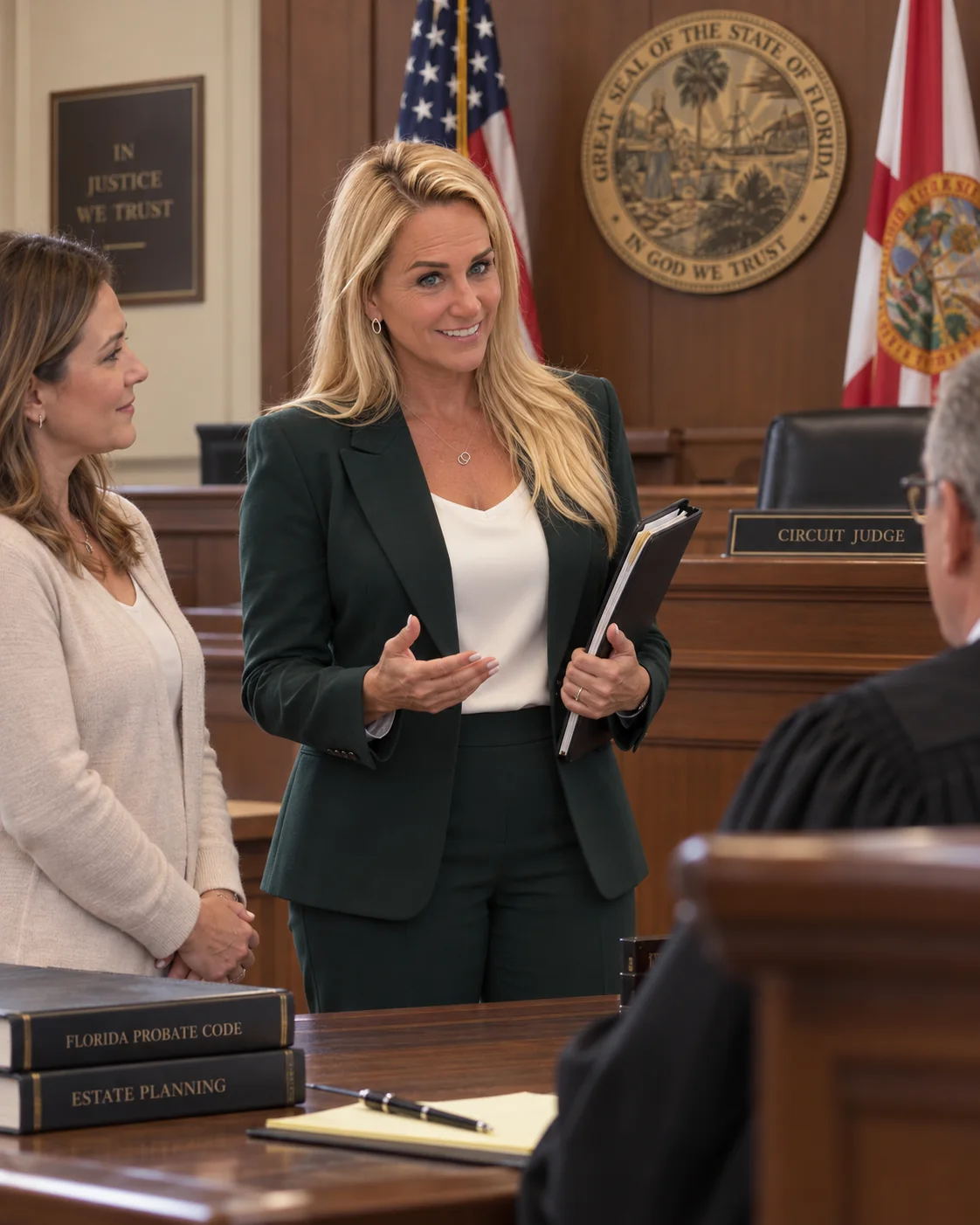
Courtroom dramatization. Not an actual proceeding.
A Florida estate dispute can start with hard questions: where did the money go, why did the will change, who controls the property, and why will the personal representative not share records? When those questions involve probate court, inherited real estate, trust assets, or family conflict, an estate litigation attorney in Florida can help you move from suspicion to legal action. Knox Law helps beneficiaries, heirs, personal representatives, and out-of-state families address contested estates across Florida, including Fort Lauderdale, Pompano Beach, Palm Beach, Tampa, and Orlando.
Probate conflict often grows faster than families expect. One delayed accounting can lead to concerns about missing funds. One sudden change can raise questions about pressure, capacity, or undue influence. One ignored beneficiary can lose time while estate assets move through accounts, property sales, or distributions. Knox Law reviews the documents, identifies the legal issues, and helps clients decide whether to challenge misconduct, defend estate decisions, or seek court intervention.
Estate litigation requires timing, proof, and a firm grasp of Florida probate law. Rachel M. Knox has practiced law in Florida since 1997, and Knox Law focuses on probate disputes, inheritance conflicts, estate asset issues, trust litigation, and contested administration. We help clients protect what matters before avoidable delays create more risk. Call Knox Law today at 954-613-6740 to discuss your Florida estate dispute and your next legal step.
When You Need an Estate Litigation Attorney in Florida
Most estate disputes do not begin with a lawsuit. They begin when something about the administration of an inheritance stops making sense, and Knox Law helps clients recognize when those concerns need legal action. If you need an estate litigation attorney in Florida, the issue may involve incomplete records, suspicious document changes, missing estate assets, or conflict between beneficiaries and a personal representative.
Warning signs may include:
- A personal representative delays or refuses to provide estate records
- A will, trust, deed, or beneficiary form changed near the end of life
- Bank accounts, investment accounts, or real estate appear to be missing
- Estate property gets sold before beneficiaries receive clear answers
- A trustee or personal representative benefits from disputed decisions
- Out-of-state heirs cannot verify what is happening in Florida probate
- Family members disagree over inherited homes, business interests, or trust assets
An estate litigation attorney in Florida becomes involved when disagreements affect inheritance rights, estate administration, trust management, or the distribution of assets. These cases often involve substantial financial stakes, particularly in Florida communities where estates include valuable real estate, investment accounts, business interests, vacation properties, and trust assets. In areas such as Palm Beach County, Broward County, Tampa, Naples, Sarasota, and Orlando, estate disputes frequently involve high-value assets that require careful investigation before distributions occur.
Florida probate courts handle a wide range of contested matters. Some disputes focus on whether a will reflects a person’s true intentions. Others involve allegations that a personal representative failed to act in the best interests of the estate. In many situations, beneficiaries simply want answers regarding transactions, transfers, or decisions that occurred before or after a loved one’s death. Understanding when those concerns justify legal action can help preserve evidence and protect inheritance rights.
Probate Administration No Longer Appears Transparent
Estate administration depends on transparency. Beneficiaries may not control estate assets directly, but they generally have the right to receive important information regarding the administration process. When information becomes difficult to obtain, concerns often follow. Knox Law regularly speaks with beneficiaries who are not looking for a lawsuit at first. Instead, they simply want answers about what happened to estate assets, why certain decisions were made, and whether the administration process is proceeding properly.
An estate litigation attorney in Florida can review court filings, inventories, accountings, financial records, and estate communications to determine whether the administration process complies with Florida probate requirements. Knox Law helps clients throughout Florida evaluate whether delays stem from legitimate administrative challenges or whether deeper problems require court involvement. This review often reveals whether estate assets remain intact, whether required disclosures have been made, and whether the administration process is moving forward appropriately.
Estate Information Stops Flowing To Beneficiaries
Many disputes begin when communication breaks down. Beneficiaries may receive few updates despite repeated requests. Questions about bank accounts, real estate holdings, investment portfolios, creditor claims, or estate expenses may go unanswered for months. In some cases, beneficiaries discover probate filings only after significant decisions have already been made.
Communication problems become more concerning when substantial assets remain unaccounted for. For example, a beneficiary may know that a parent owned multiple investment accounts before death but later discover that only a portion of those assets appears within probate records. A family member may remember discussions regarding rental properties, business interests, or brokerage accounts that never appear in estate inventories. Situations like these often require a closer examination of financial documentation.
Missing Information Often Leads To Broader Investigations
The absence of information does not automatically indicate wrongdoing. Even so, missing records frequently serve as the first indicator that additional investigation is necessary. Knox Law often begins by reconstructing the financial picture of the estate before determining whether further legal action may be appropriate.
Records that often become important include:
- Bank statements
- Tax returns
- Trust records
- Property deeds
- Brokerage account summaries
- Business ownership documents
- Transfer records
- Prior estate planning documents
Reviewing these materials early may help identify unexplained withdrawals, unusual transfers, ownership changes, or assets that should have been included in the estate.
Probate Deadlines Continue Moving Forward
Florida probate courts impose deadlines throughout estate administration. Beneficiaries who wait too long to investigate concerns may find their options becoming more limited. Many families hope problems will resolve themselves, but delays often make disputes more difficult to address later.
Objections to certain actions, challenges to estate documents, and disputes involving fiduciary conduct often depend upon timely action. A delay can make it harder to preserve records, locate witnesses, secure financial evidence, or prevent distributions that may complicate future recovery efforts. In larger estates, substantial assets can change hands before concerns receive meaningful review.
Early Review Creates More Options
A prompt review of the estate often provides more flexibility. When concerns arise shortly after probate begins, courts generally have more tools available to address disputes before assets change hands.
This can be particularly important when estates include commercial property, waterfront homes, vacation residences, closely held businesses, investment portfolios, trust assets, or income-producing real estate. These assets often require ongoing management decisions while probate remains active. Reviewing concerns early may help beneficiaries understand what is occurring before those decisions create more complications.
Changes To Estate Documents Raise Serious Questions
Many Florida estate litigation cases involve changes made during the final months or years of a person’s life. Family members frequently become concerned when a new will, trust amendment, beneficiary designation, or deed transfer produces a dramatically different result from prior estate plans.
Not every late-life change creates a legal issue. People retain the right to modify estate planning documents throughout their lives. Problems arise when circumstances suggest that another person may have influenced those decisions improperly. Knox Law frequently works with clients who are not questioning the existence of a new document itself. Instead, they are questioning how that document came into existence and whether it accurately reflects the person’s intentions.
Significant Beneficiary Changes Occur Late In Life
Disputes often arise when long-term beneficiaries suddenly disappear from estate documents. A child who was included in multiple prior estate plans may find that a new document redirects substantial assets elsewhere. Long-standing inheritance arrangements sometimes change dramatically during periods of illness, dependency, or isolation.
These situations commonly involve questions about who arranged meetings with attorneys, who communicated with financial institutions, who attended planning meetings, who controlled access to the individual, who benefited from the changes, and who participated in financial decisions before death. Investigating those facts helps establish whether the changes reflect independent decision-making or outside influence. Knox Law helps clients evaluate these circumstances through document review and factual investigation.
Florida Courts Examine The Full Circumstances
Florida probate courts do not focus solely on the final document itself. Courts frequently examine surrounding circumstances that help explain how the document came into existence.
Relevant evidence may include medical records, witness testimony, attorney notes, emails, text messages, caregiving arrangements, financial activity, and estate planning histories. Taken together, these details often provide a more complete picture of what occurred. An estate litigation attorney in Florida may use this information to evaluate claims involving undue influence, fraud, capacity concerns, or other contested probate issues.
Medical Evidence Often Becomes Critical
Medical records often play a significant role in estate litigation. Physician notes, neuropsychological evaluations, prescription histories, treatment records, and cognitive assessments may help establish the person’s condition when important documents were executed.
Witness testimony frequently supplements medical evidence. Friends, neighbors, financial advisors, caregivers, and family members may provide valuable insight regarding daily functioning and decision-making abilities. Knox Law can help determine which evidence may be relevant when evaluating these claims.
Estate Assets Appear To Be Missing
Missing assets represent one of the most common reasons beneficiaries seek assistance from an estate litigation attorney in Florida. Knox Law frequently hears from clients who know certain assets existed before death but cannot determine where those assets went afterward.
These disputes frequently involve bank accounts, brokerage accounts, real estate transfers, business interests, valuable collections, jointly titled property, trust assets, and cash transfers. In many situations, tracing the movement of assets becomes one of the most important parts of the case. Beneficiaries often want to understand whether assets were transferred properly, whether ownership changed before death, and whether estate inventories accurately reflect everything that should be included.
Unexplained Transfers Occurred Before Death
Asset transfers made shortly before death often attract scrutiny. Family members may discover substantial withdrawals, property transfers, beneficiary changes, gifts, or account activity that appears inconsistent with prior financial behavior.
The timing of these transactions often becomes important. Courts frequently evaluate whether transfers occurred during periods of illness, dependency, isolation, or increased influence from a particular individual. A transfer may ultimately prove legitimate, but understanding why it occurred often requires a detailed factual investigation. Knox Law helps clients analyze these transactions and determine whether further action may be appropriate.
Valuable Florida Real Estate Becomes Contested
Real estate disputes frequently appear in Florida estate litigation. A single property in Palm Beach, Fort Lauderdale, Naples, Sarasota, Tampa, Orlando, or Miami may represent a significant percentage of the entire estate.
Questions may arise regarding ownership interests, transfer documents, homestead protections, occupancy rights, property sales, rental income, or deed changes. These disputes often require a detailed review of title records, estate planning documents, financial records, and probate filings. Florida’s strong real estate market often increases the stakes, especially when a property purchased years ago now represents one of the most valuable assets within the estate.
High-Value Properties Increase Litigation Risks
As property values increase, disputes often become more complex. Waterfront homes, investment properties, vacation residences, and commercial real estate frequently create competing interests among beneficiaries.
Some beneficiaries may want to sell. Others may want to keep the property. Still others may question whether ownership changed before death. Resolving these conflicts requires a clear understanding of both probate law and the financial realities associated with the property itself.
Fiduciary Conduct Comes Under Scrutiny
Personal representatives owe legal duties to the estate and interested parties. Beneficiaries often seek assistance from Knox Law when they believe those duties have not been fulfilled properly. An estate litigation attorney in Florida can evaluate whether concerns involve ordinary administration issues or potential fiduciary violations that require further review.
Not every disagreement justifies litigation. Personal representatives often face difficult decisions during estate administration. Litigation becomes more likely when conduct appears to benefit the fiduciary personally, when financial records remain unavailable, or when transparency disappears altogether. Concerns may arise regarding property sales, investment decisions, expense payments, creditor claims, business operations, or asset distributions.
Courts Expect Accountability
Florida probate courts expect fiduciaries to maintain accurate records and support important decisions with documentation. Reviewing supporting documentation often helps determine whether the administration process complied with Florida law.
When records are incomplete or unavailable, disputes tend to intensify. Accountability becomes especially important in estates involving substantial assets, multiple beneficiaries, trust property, or ongoing business operations. Knox Law works with beneficiaries and personal representatives to evaluate these issues using financial records, court filings, and probate documentation.
Emergency Court Intervention Becomes Necessary
Certain situations require immediate action. Estate assets may be at risk of transfer, liquidation, concealment, dissipation, or sale before ordinary court procedures can address the issue.
Emergency probate disputes often involve requests for temporary relief designed to preserve assets while the court evaluates the underlying claims. These situations may arise when significant money moves between accounts, real estate sales appear imminent, or beneficiaries believe estate assets face immediate risk.
Fast Action Can Preserve Estate Value
Waiting may create additional complications when assets are actively changing hands. Early intervention may help maintain the status quo until all interested parties have an opportunity to present evidence and protect their interests.
For beneficiaries, heirs, trustees, and personal representatives facing serious concerns, Knox Law can help evaluate whether immediate action is necessary. An estate litigation attorney in Florida can review the circumstances, explain available options, and help determine whether emergency probate relief may be appropriate before valuable rights, evidence, or estate assets are lost.
Why Florida Families Dispute Wills, Trusts, and Inheritances
A waterfront home in Palm Beach. A brokerage account in Fort Lauderdale. A vacation property near Naples. A revised will was signed shortly before death. Florida estate litigation often begins when these pieces no longer fit together the way beneficiaries expected. By the time family members start asking questions, probate proceedings may already be underway, assets may already be changing hands, and the person with the answers may control the records.
Common reasons Florida inheritance disputes begin include:
- A will or trust changes near the end of life
- A caregiver, spouse, or relative receives an unexpected inheritance
- Bank accounts, real estate, or investment assets appear to be missing
- A personal representative limits access to estate information
- A trustee delays distributions or refuses to explain decisions
- Adult children and surviving spouses disagree over property rights
- Out-of-state beneficiaries cannot verify what is happening in Florida
- Estate inventories leave out assets family members knew existed
Florida creates unique conditions for these disputes. The state attracts retirees from across the country, many residents own valuable real estate, and blended families are increasingly common. As a result, estate litigation in Florida often involves competing expectations between surviving spouses, adult children, stepchildren, caregivers, business partners, and beneficiaries who live far from the probate court handling the estate.
Many people assume inheritance disputes begin because someone dislikes the amount they received. In reality, litigation often starts because someone discovers information that does not match what they were told for years. A beneficiary may learn that a parent transferred property before death. A sibling may discover that a trust amendment removed several family members. An heir may notice that estate inventories fail to mention assets everyone knew existed. These situations create questions that probate courts may need to resolve.
Florida Real Estate Frequently Triggers Estate Litigation
In many Florida estates, real property represents the largest asset under administration. That reality creates pressure whenever beneficiaries disagree about what should happen next. One heir may want to sell immediately. Another may want to keep the property within the family. A third beneficiary may already occupy the property and oppose any sale. What begins as a disagreement about a house can quickly evolve into a broader dispute involving inheritance rights, valuation, expenses, occupancy, and estate administration.
These conflicts become even more significant when the property has appreciated substantially over time. A condominium purchased decades ago in Boca Raton, Fort Lauderdale, Sarasota, or Naples may now represent a large portion of the entire estate. Family members who rarely discussed the property before death may suddenly find themselves arguing about ownership interests, maintenance costs, rental income, repairs, taxes, insurance obligations, and distribution strategies.
Florida real estate disputes often involve more than a simple decision to sell or keep a property. Beneficiaries may question whether improvements were funded appropriately, whether someone lived in the property without paying expenses, or whether estate funds were used for maintenance that primarily benefited one heir. Knox Law frequently helps clients analyze these issues before disagreements become entrenched positions that are difficult to resolve.
Deed Changes Often Surprise Beneficiaries
Some of the most contested Florida estate litigation matters involve deed transfers completed before death. Adult children frequently discover that a property they expected to pass through probate was transferred into another person’s name months or years earlier. In some cases, beneficiaries learn about the transfer only after reviewing county property records or probate filings.
These situations naturally generate questions. Was the transfer intentional, did the property owner understand the legal consequences, did someone pressure or influence the decision, did the transfer comply with Florida law, was the property part of a larger estate planning strategy? Answering those questions requires much more than speculation.
A wills, trusts, and estate litigation attorney in Florida often reviews deeds, transfer histories, trust documents, financial records, communications, and surrounding circumstances to determine what actually occurred. Knox Law helps clients evaluate these facts carefully because assumptions alone rarely provide reliable answers.
Homestead Property Creates Additional Complications
Florida homestead laws frequently surprise beneficiaries who believe a will controls every aspect of inheritance. Certain constitutional protections and inheritance rules may affect how property passes, regardless of what some estate planning documents appear to say.
As a result, beneficiaries sometimes discover that the legal outcome differs from what they expected after reading a will or trust. Questions involving surviving spouses, minor children, adult children, ownership rights, and creditor protections can dramatically affect how a property is distributed. These issues often require a detailed analysis of probate records, title history, ownership structure, and homestead laws.
Knox Law regularly assists clients who are trying to understand how Florida homestead protections interact with probate administration and inheritance rights. What appears straightforward at first glance may involve several layers of legal analysis.
Vacation Homes And Investment Properties Create Different Disputes
Not every property dispute involves a primary residence. Florida estates frequently include vacation homes, seasonal residences, rental properties, commercial buildings, and investment real estate.
Each property type creates different challenges. Beneficiaries may disagree about whether to continue generating rental income, sell the property, refinance debt, transfer ownership interests, or invest additional funds into maintenance and repairs. When substantial appreciation potential exists, disagreements often become more difficult to resolve informally.
A beachfront property in Naples creates different concerns than a rental portfolio in Tampa or a commercial property in Orlando. Knox Law helps clients evaluate how these assets fit within the broader estate administration process and whether disputes require formal probate litigation.
Caregiver Relationships Often Lead To Probate Challenges
Florida’s large senior population creates another recurring source of estate litigation. Caregivers often play an important role in helping elderly individuals maintain independence and manage daily life. Most caregivers provide valuable assistance and act appropriately. However, probate disputes sometimes arise when a caregiver receives substantial gifts, beneficiary designations, property interests, or favorable treatment under a new estate plan.
These concerns frequently develop when family members notice significant changes occurring after a caregiver becomes heavily involved in financial, medical, or personal affairs. The issue is not necessarily the caregiver relationship itself. Instead, beneficiaries often question whether estate planning decisions truly reflected the person’s independent wishes.
An estate litigation attorney in Florida may evaluate these situations by examining timelines, financial records, estate planning documents, medical information, and witness testimony. Knox Law helps clients separate legitimate concerns from assumptions by focusing on evidence rather than speculation.
Isolation Can Change Estate Dynamics
Many disputed estate plans share a similar pattern. Family members who once communicated regularly gradually lose access while one individual gains increasing control over communication, appointments, finances, transportation, and personal affairs.
Isolation alone does not establish misconduct. However, courts often examine whether family relationships changed significantly before important estate planning decisions occurred. A sudden reduction in family contact followed by substantial estate changes may raise questions that deserve closer review.
These situations often involve more than one event. Instead, they develop gradually over months or years. Knox Law helps clients reconstruct those timelines to better understand what occurred before the disputed documents were executed.
The Timing Of Estate Changes Matters
A will signed twenty years ago rarely generates the same scrutiny as a document signed several weeks before death. Florida probate disputes frequently focus on timing because timing often helps explain why certain decisions were made.
An estate litigation attorney in Florida may examine when documents were executed, who attended meetings, what medical conditions existed, whether legal counsel was involved, and whether prior estate plans remained consistent for many years beforehand. The goal is to understand whether a change reflected a long-term intention or a recent development.
Knox Law often finds that timing provides critical context in disputes involving wills, trusts, beneficiary designations, and property transfers. A timeline rarely answers every question, but it frequently helps identify which issues deserve further investigation.
Out-Of-State Heirs Face Unique Florida Probate Problems
Many Florida estates involve beneficiaries who live hundreds or thousands of miles away. Adult children may live in New York, Illinois, Pennsylvania, Michigan, Texas, or California while probate administration takes place in Florida.
That distance creates practical challenges. Beneficiaries cannot easily inspect real property, attend local meetings, review physical records, or verify information independently. As a result, they often depend heavily on updates from the personal representative or trustee.
When communication becomes limited, concerns naturally increase. Beneficiaries may wonder whether assets remain intact, whether expenses are reasonable, whether property is being managed appropriately, or whether important information is being withheld. Knox Law frequently works with out-of-state beneficiaries who need a clearer understanding of what is occurring within a Florida estate.
Information Control Creates Suspicion
The individual controlling estate records often controls the flow of information. Beneficiaries may receive summaries instead of source documents. They may hear about transactions after they occur rather than before. Questions may be answered incompletely or not at all.
This situation does not automatically indicate misconduct. Estate administration often involves delays and practical challenges. However, when information becomes increasingly difficult to obtain, beneficiaries frequently seek independent review to determine whether the administration process is proceeding appropriately.
An estate litigation lawyer in Florida can evaluate whether concerns involve simple communication problems, incomplete accounting practices, fiduciary issues, or conduct that may require court intervention. Knox Law helps clients obtain the information necessary to make informed decisions about their rights and options.
Estate Records Tell The Real Story
Probate disputes are ultimately decided through evidence rather than assumptions. Financial statements, tax returns, inventories, deeds, trust documents, court filings, account statements, communications, and transfer records often provide a clearer picture than family recollections alone.
For that reason, many Florida estate litigation matters focus heavily on document review. Records frequently reveal whether concerns involve misunderstandings, administrative errors, unexplained transactions, missing assets, or conduct that requires court involvement.
Knox Law helps beneficiaries, heirs, trustees, and personal representatives analyze those records carefully. An estate litigation attorney in Florida can often identify important facts that are not immediately obvious from conversations alone. In many cases, the records ultimately explain whether a dispute involves ordinary probate administration or a problem that requires legal action.
Estate Litigation Services Knox Law Provides Throughout Florida
Not every estate dispute follows the same path. A missing bank account requires a different strategy than a challenge involving a revised will. Defending a personal representative also involves different issues than pursuing a claim for a beneficiary. Knox Law handles contested probate and inheritance matters throughout Florida, including disputes involving significant assets, blended families, trust property, and out-of-state heirs.
Common Florida estate litigation services include:
- Beneficiary claims involving missing information or delayed distributions
- Personal representative defense in contested probate administration
- Inheritance disputes between heirs, spouses, and family members
- Probate accounting disputes involving unclear financial activity
- Removal actions involving personal representative misconduct
- Undue influence claims tied to suspicious estate changes
- Estate asset disputes involving real estate, accounts, or business interests
- Emergency probate disputes involving immediate risk to estate property
Knox Law helps clients identify what rights they have under Florida probate law before deciding how to move forward. Some cases require document review and negotiation. Others require court filings, emergency action, or a direct challenge to estate conduct. The right approach depends on the estate assets, the people involved, and the evidence available.
Estate Litigation Lawyer For Beneficiaries In Florida
Beneficiaries often find themselves in a difficult position during estate administration. They have a financial interest in the estate, yet someone else controls the records, assets, and decision-making process. As a result, beneficiaries frequently discover problems long after transactions occur.
Florida law provides beneficiaries with important rights, but exercising those rights often requires understanding what information should be available and when it should be produced. When communication breaks down or financial questions remain unanswered, beneficiaries may need to pursue formal action to obtain clarity.
Beneficiaries Often Discover Problems Through Missing Information
Many estate disputes begin when expected information never arrives. A beneficiary may know that a parent owned multiple investment accounts, but only one account appears in probate filings. Another beneficiary may receive estate updates that seem incomplete or inconsistent with prior conversations.
These situations create legitimate concerns. Before anyone can evaluate whether misconduct occurred, they must understand what assets existed, what transactions occurred, and how estate property is being administered.
Financial Records Often Reveal The Full Story
Bank statements, brokerage records, deeds, tax returns, and accounting documents frequently provide information that informal explanations cannot. A careful review of these records often helps determine whether concerns stem from misunderstandings or whether deeper issues exist within the administration process.
Estate Litigation Lawyer For Personal Representatives In Florida
Personal representatives occupy one of the most scrutinized roles in Florida probate administration. Every decision involving property sales, distributions, creditor claims, and financial management may later face examination from beneficiaries or other interested parties.
Many personal representatives never anticipated serving in this role. A spouse, child, sibling, or trusted friend may suddenly become responsible for administering a complex estate involving substantial assets, multiple beneficiaries, and competing expectations.
Estate Administration Creates Significant Responsibilities
Florida personal representatives must manage assets, communicate with interested parties, satisfy court requirements, and comply with fiduciary obligations. Even straightforward estates can become complicated when beneficiaries disagree about how administration should proceed.
Disputes often arise because family members view the same situation differently. One beneficiary may demand immediate distributions while another argues that unresolved issues require additional investigation.
Documentation Helps Protect Personal Representatives
Well-maintained records often become a personal representative’s strongest defense. Financial statements, correspondence, receipts, inventories, and accounting records help demonstrate how decisions were made and why specific actions occurred.
When administration decisions face scrutiny, documentation frequently provides the clearest explanation of events.
Estate Litigation Lawyer For Inheritance Disputes In Florida
Inheritance disputes frequently involve more than disagreements about money. Family history, expectations, prior promises, and changing relationships often influence how beneficiaries view the outcome of an estate.
These disputes can develop even when estate planning documents appear valid. Beneficiaries may disagree about asset valuations, property distributions, trust interpretations, or ownership rights connected to specific assets.
Family Expectations Often Conflict With Estate Documents
A beneficiary may spend years believing a family home would eventually pass to them, only to discover that the will directs a different result. Another heir may expect equal treatment but later learn that significant gifts were made during the decedent’s lifetime.
When expectations collide with legal documents, disputes frequently follow. Understanding which rights exist under Florida law becomes critical before assumptions turn into costly mistakes.
Asset Distribution Disputes Frequently Involve Real Property
Florida inheritance disputes often center on homes, condominiums, rental properties, and vacation residences. Unlike financial accounts that can be divided mathematically, real estate presents practical challenges that beneficiaries must resolve.
Questions regarding occupancy, maintenance costs, property sales, and ownership interests often become central issues within inheritance litigation.
Estate Litigation Lawyer For Probate Accounting Disputes In Florida
Accounting disputes often reveal some of the most important information in estate litigation. Probate accountings provide a detailed record of financial activity involving estate assets, income, expenses, distributions, and transactions.
When beneficiaries question how estate funds were managed, accounting records frequently become the starting point for investigation.
Accounting Reviews Can Identify Unexplained Transactions
A properly prepared accounting allows interested parties to follow the movement of estate assets. Missing entries, unusual expenses, unexplained withdrawals, or incomplete reporting may raise concerns that require further review.
Many probate accounting disputes begin with simple questions. As additional records emerge, those questions sometimes expand into broader litigation involving fiduciary conduct or asset management.
Financial Activity Should Match Supporting Documentation
Accounting entries should correspond with bank statements, invoices, receipts, closing documents, and other supporting records. When those documents conflict with reported activity, additional investigation often becomes necessary.
The goal is not merely to review numbers. The goal is to understand what happened to estate assets and whether administration complied with Florida probate requirements.
Estate Litigation Lawyer For Removal Of Personal Representatives In Florida
Florida courts do not remove personal representatives simply because beneficiaries disagree with their decisions. Removal typically requires specific facts showing that continued administration creates risk for the estate or interested parties.
These disputes often arise when beneficiaries believe estate administration has become compromised by conflicts of interest, financial concerns, or failures to perform required duties.
Courts Focus On Conduct Rather Than Personal Disagreements
Family tension alone rarely justifies removal. Instead, courts examine conduct, records, communications, and administration decisions to determine whether intervention is appropriate.
The focus remains on protecting the estate rather than resolving personal conflicts between family members.
Evidence Plays A Central Role In Removal Proceedings
Successful removal petitions generally require more than suspicions. Financial records, court filings, communications, and documented actions frequently determine whether removal becomes appropriate under Florida law.
Estate Litigation Lawyer For Undue Influence Claims In Florida
Undue influence claims often emerge after significant changes to estate plans. Beneficiaries may question why long-standing inheritance arrangements suddenly changed, particularly when one individual appears to have gained substantial benefits.
These cases require careful investigation because undue influence rarely occurs in public. Instead, courts often evaluate patterns of behavior, relationships, timing, and surrounding circumstances.
Dependence Can Create Opportunities For Influence
Many contested estate plans involve situations in which the decedent became increasingly dependent on another individual. Caregivers, companions, relatives, or trusted advisors may gain substantial access during periods of declining health or isolation.
Dependency alone does not establish wrongdoing. However, it often becomes an important factor when courts evaluate whether influence affected estate planning decisions.
The Timeline Often Matters More Than One Event
Undue influence cases rarely hinge on a single conversation. Instead, courts frequently examine months or years of interactions leading up to the execution of disputed documents.
Patterns involving isolation, control over information, financial involvement, and changes to estate plans often receive significant attention during litigation.
Estate Litigation Lawyer For Estate Asset Disputes In Florida
Estate asset disputes focus on ownership, valuation, transfers, and administration of specific property. These cases often involve assets that beneficiaries believe should belong to the estate but cannot locate within probate records.
Because Florida estates frequently include valuable real estate and investment assets, ownership disputes can involve substantial financial consequences.
Asset Tracing May Become Necessary
Certain disputes require a detailed reconstruction of financial activity. Funds may move between accounts, properties may transfer ownership, or assets may become commingled over time.
Tracing helps establish where assets originated, where they moved, and whether they should remain subject to estate administration.
High-Value Assets Often Receive Greater Scrutiny
Luxury properties, investment portfolios, closely held businesses, and substantial financial accounts frequently attract greater attention during probate disputes. The higher the asset value, the greater the likelihood that beneficiaries will seek detailed explanations regarding ownership and transfers.
Estate Litigation Lawyer For Emergency Probate Disputes In Florida
Some estate disputes cannot wait for the normal pace of litigation. Assets may face immediate transfer, liquidation, or dissipation before a court can fully evaluate the dispute.
Emergency probate proceedings focus on preserving assets and maintaining stability while underlying claims move through the court process.
Time-Sensitive Situations Require Immediate Review
A pending property sale, large account withdrawal, or disputed transfer may require immediate attention. Waiting several months for standard litigation procedures could create consequences that become difficult to reverse later.
Early evaluation helps determine whether emergency relief may be available under the circumstances.
Preserving Assets Often Protects All Parties
Emergency probate actions do not determine the outcome of a dispute. Instead, they frequently focus on maintaining the status quo until the court has an opportunity to evaluate evidence and hear competing positions.
Preservation measures help ensure that assets remain available while the litigation process unfolds.
Speak With an Estate Litigation Attorney at Knox Law
If probate has turned into conflict, Knox Law can help you review the records, identify the dispute, and decide what legal step makes sense next. Estate litigation may involve a contested will, missing assets, trustee misconduct, beneficiary rights, or a personal representative who refuses to provide information. The sooner you address those issues, the easier it may be to protect estate property and preserve important evidence.
Rachel M. Knox has practiced law in Florida since 1997, and Knox Law assists clients with probate disputes throughout Florida, including Fort Lauderdale, Pompano Beach, Palm Beach, Tampa, Orlando, and surrounding communities. Whether you are a beneficiary, heir, personal representative, or out-of-state family member, we can help you understand the estate issue and respond with purpose.
Contact estate litigation attorney in Florida, Knox Law, through our contact us page or call 954-613-6740 today to discuss your estate litigation matter.